
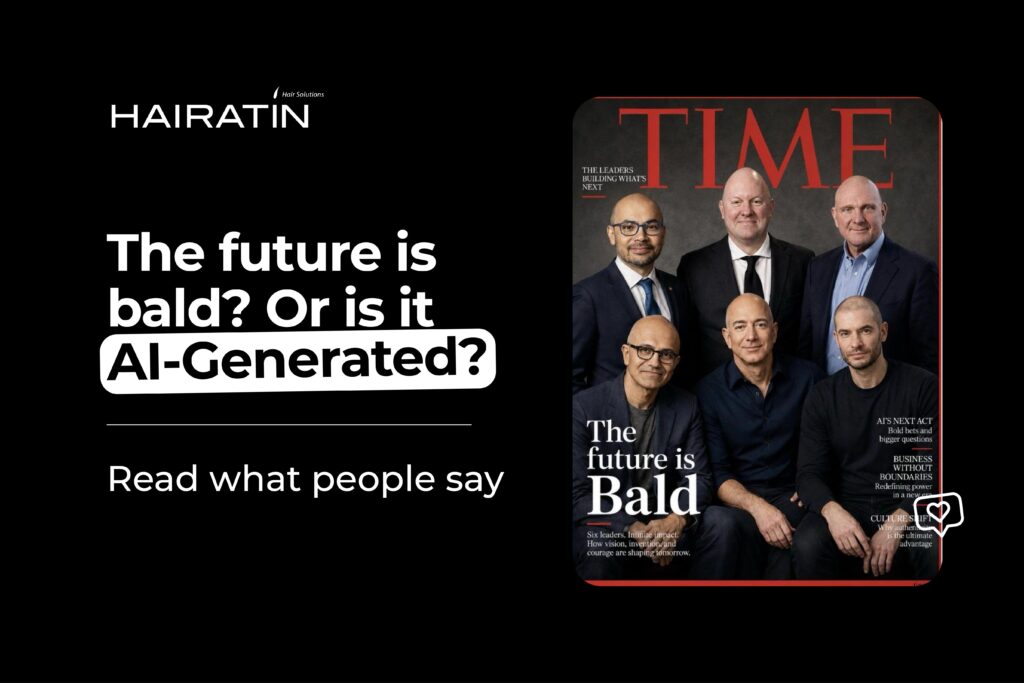
A fake magazine cover went viral with a provocative headline: “The Future Is Bald.” It featured a group of recognizable figures from the technology world, all sharing one very visible characteristic: little or no hair.
There was just one problem: the cover wasn’t actually published by TIME. It was AI-generated.
That detail is what makes the whole conversation even more interesting. Because the image wasn’t simply convincing enough to fool people. The idea behind it was convincing enough to feel plausible. And that raises a bigger question: why does “The Future Is Bald” sound like a believable story in the first place?
A Fake Cover, a Very Real Reaction
AI-generated images have made it increasingly difficult to separate real photography from synthetic content. But the interesting part of this particular image isn’t only that people believed it was real.
It’s that people immediately understood what the image was trying to say.
The combination of influential tech figures, a recognizable magazine-style layout and the headline “The Future Is Bald” created an easy narrative: successful, powerful people are bald, therefore baldness somehow represents where we’re headed. That interpretation didn’t come from nowhere.
Baldness has been culturally associated with men in positions of authority for decades. Think of CEOs, politicians, actors, athletes and fictional characters. In many cases, a shaved or bald head has been presented as confident, mature, masculine or even intimidating. So when AI put several successful-looking bald men on one imaginary cover, it didn’t create an entirely new idea, It amplified one that already exists.
Why Hair Is Such an Easy Symbol
Hair is one of the most visible parts of our appearance, which makes it particularly easy to turn into a symbol. A haircut can communicate age, personality or style. Going gray can become part of someone’s identity. Shaving your head can be a deliberate choice. And thinning hair can become something people notice long before anyone else does.
That’s also why hair loss can be complicated. Two people can experience the same amount of thinning and feel completely differently about it. One might not care. Another might change their hairstyle, explore treatment options or simply look for ways to make certain areas less noticeable.
There isn’t a universal emotional response to hair loss because there isn’t a universal relationship with hair.
What AI Changes About the Conversation
There’s another layer here that makes this particular story relevant beyond one viral image. AI is increasingly capable of changing the way we see ourselves, you can generate an image of yourself with a different haircut, different hair color or significantly more hair. You can remove hair from a photo just as easily as you can add it.
That means we’re entering a strange period where the version of ourselves we see on a screen doesn’t necessarily have to match reality, and that can be fun. It can also influence our expectations. We’ve spent years getting used to edited photos, filters and carefully curated social media images. AI takes that one step further by making almost any appearance imaginable possible.
For someone experiencing hair loss, that can be particularly interesting. Seeing an AI-generated version of yourself with a fuller hairline might show you a look you like, but it doesn’t necessarily tell you how to achieve it in real life. That’s where the distinction between visualizing something and actually choosing what to do about it matters.
So, Is Baldness Actually the Future?
Probably not in the way the headline suggests. Hair loss is common, but it isn’t a universal destination. Genetics, age, hormones, medical conditions, medications, stress and other factors can all influence hair density and hair loss and even when someone experiences significant hair loss, there isn’t one predetermined way they’re supposed to respond.
Some people embrace it, some choose medical treatments, some change their hairstyle, some use cosmetic solutions to make thinning areas look fuller and some simply don’t want to think about it.
For those who aren’t ready for a permanent change, cosmetic solutions can also make a difference. Hair Fibers can instantly create the appearance of fuller, denser hair by blending with existing strands and covering the look of thinning areas.
The important part is that none of these choices says anything about someone’s intelligence, success or worth.
Maybe the Future Is About More Choices
The interesting thing about the viral cover isn’t whether baldness really is “the future”. It’s that a completely artificial image was able to create a believable story about something as personal and real as hair loss.
AI can generate the image; it can show us what someone might look like with more hair, less hair or completely different hair, but what someone actually wants to do with their hair is still a personal decision.
Maybe you want to embrace being bald, maybe you want to explore ways to address hair loss, or you just want your thinning areas to look a little fuller when you go out.
None of those choices needs to be a statement and that’s where the conversation around hair loss should ultimately go: away from telling people what their hair means, and toward giving them the freedom to decide what they want to do about it.
So, is the future bald? Maybe. Maybe not.
But if a fake AI-generated cover can start a conversation about the future of hair, perhaps the more interesting future is one where people have more choices and less pressure to explain them.