
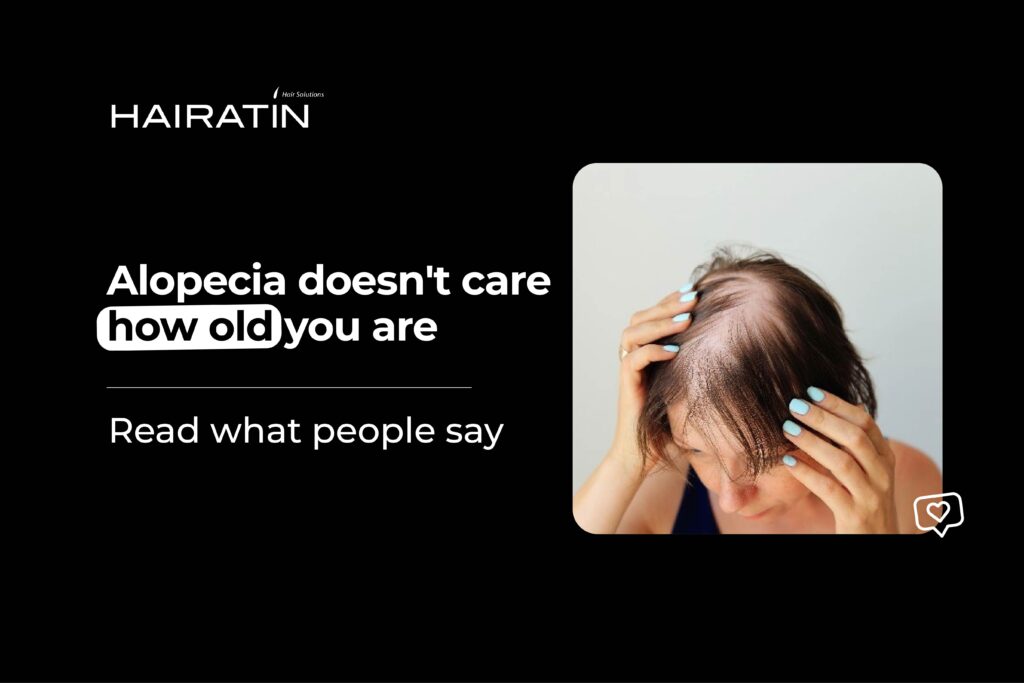
Did you know alopecia can start before kindergarten?
Most people picture hair loss as something that happens later in life. It doesn’t. Children as young as 2 can experience it and we know a lot of parents that struggle with this.
By 21, 1 in 5 people have already noticed their hair changing.
Teenagers and young adults dealing with hair loss often feel like they’re the only ones when they’re not. Hormones, stress, genetics, and autoimmune conditions don’t wait for a convenient moment.
Pregnancy gives, and then it takes.
Postpartum hair loss affects up to 50% of new mothers, usually hitting hardest right around the time they’re already running on no sleep and zero personal time.
“You’re just getting older” is not an answer.
Older adults are often told thinning hair is normal and expected. Maybe. But normal doesn’t mean you have to like it or ignore it.
September is Alopecia Awareness Month, a time to recognize the many people who experience hair loss and to remind them they are not alone.
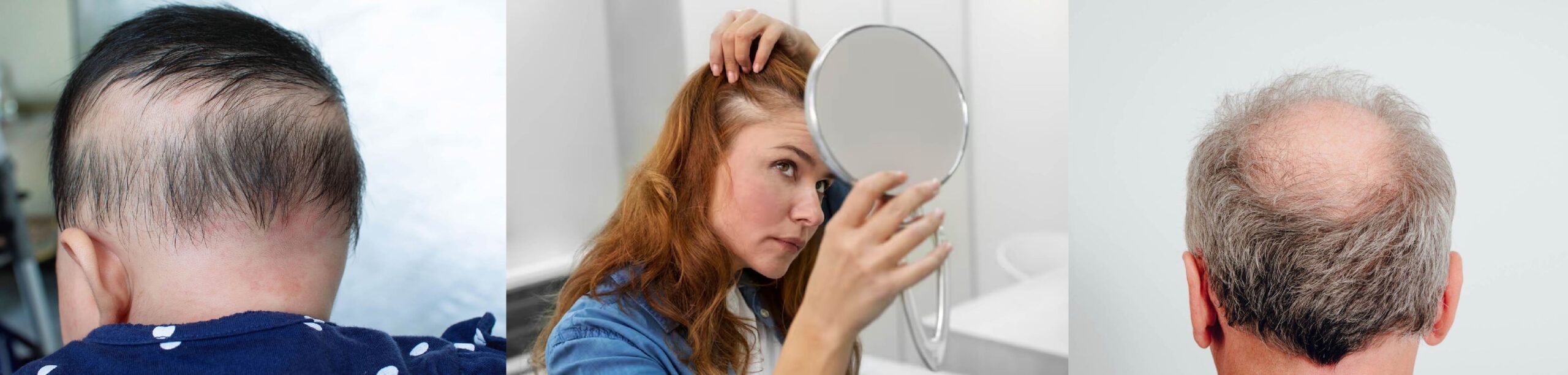
Alopecia can affect anyone. It does not belong to one age group, one gender, or one stage of life. Hair loss can begin in childhood, appear during the teenage years, develop in adulthood, or become more noticeable later in life. Every experience is different, and every person deserves support, understanding, and options.
You might interested: Alopecia has no age: What you need to know before hair loss starts
Alopecia can appear at age 5 or 50
For children, alopecia may appear as small patches of hair loss or more widespread shedding. This can be especially emotional because hair is often tied to identity, confidence, and how children see themselves among their peers.
For teenagers and young adults, hair loss can feel sudden and confusing. At an age when appearance can feel especially important, thinning hair or bald spots may affect self-esteem. Hormonal changes, stress, genetics, autoimmune conditions, and other health factors can all contribute.
For adults, alopecia may show up during major life transitions. Pregnancy, postpartum changes, illness, stress, nutritional deficiencies, aging, and hereditary hair loss can all impact the scalp and hair growth cycle. Some people notice gradual thinning, while others experience more visible shedding or patchy loss.
For older adults, hair loss is often seen as “normal,” but that does not mean it should be ignored or dismissed. Thinning hair can still affect confidence and quality of life. People at every age deserve to feel good about how they look.
Alopecia is not one single experience.
The important thing to understand is that alopecia is not one single experience. It can look like a receding hairline, thinning at the crown, widening parts, circular bald patches, overall shedding, or complete hair loss. It can be temporary or long-term. It can be mild or deeply impactful.
At Hairatin, we understand that hair loss has no age limit. That is why we decided to go on a different route. Whether someone is just starting to notice thinning, dealing with alopecia areata, experiencing postpartum shedding, or looking for a long-term restoration solution, We want you to feel like yourself, no matter your age.
Hair loss can feel isolating, but it is more common than many people realize. Alopecia Awareness Month is an opportunity to open the conversation, reduce stigma, and encourage people to seek support without shame.
No matter your age or where you are in your hair loss journey, you deserve care that sees the whole person, not just the scalp. Hairatin is here to help people at every stage feel informed, supported, and confident again.