
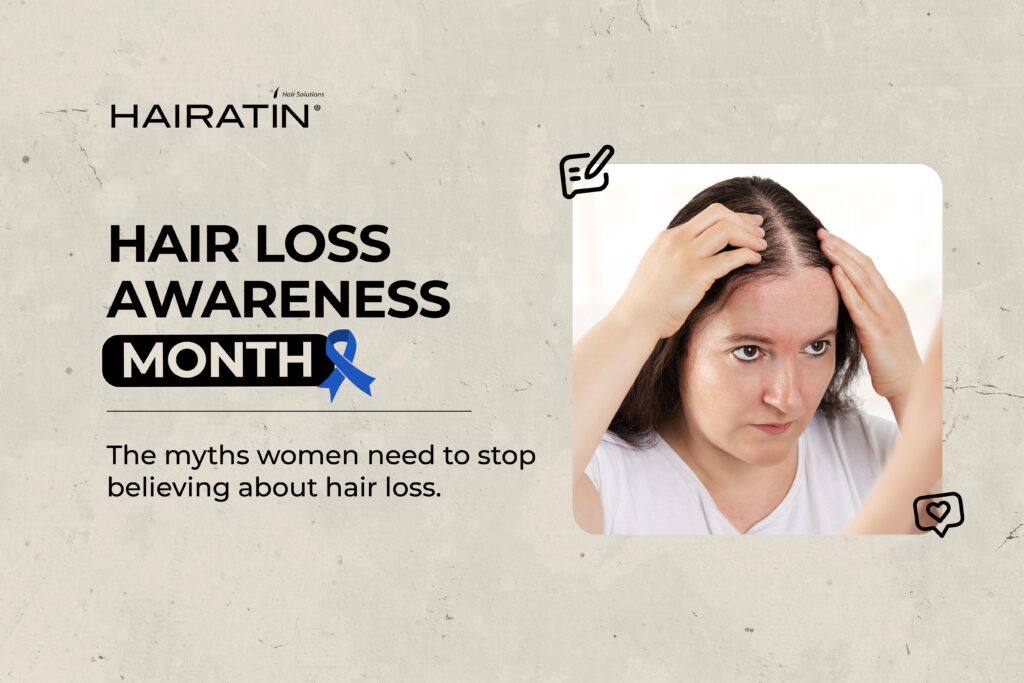
Every August, Hair Loss Awareness Month encourages us to have more honest conversations about hair loss. But if we’re being honest, there are a few things we should stop saying altogether.
Hair loss affects millions of people, yet it’s still surrounded by outdated advice, misconceptions, and comments that often do more harm than good. Research on androgenetic alopecia, the most common form of pattern hair loss, suggests it affects roughly half of both men and women at some point in their lives, according to the National Institutes of Health. And still, most of what gets said about it is wrong.
Whether you’re just starting to notice thinning hair or you’ve been dealing with it for years, chances are you’ve heard at least one of these before. Let’s clear up a few of the biggest myths.
Is hair loss really “just genetics”?
Genetics certainly play a role, but they’re far from the whole story.
Stress, hormonal changes, certain medications, nutritional deficiencies, scalp conditions, autoimmune disorders, and even styling habits can all contribute to hair thinning. That’s why two people from the same family can experience completely different patterns of hair loss.
Understanding the cause is the first step toward finding the right solution.
Does hair loss only happen to men?
This is probably one of the biggest misconceptions. Millions of women experience thinning hair, especially after pregnancy, during menopause, or as hormone levels change over time. The difference is that women often experience diffuse thinning instead of a receding hairline, making it less talked about, but no less common.
Hair loss doesn’t discriminate.
If you’re losing your hair, is there really nothing you can do?
Fortunately, that’s no longer true.
Depending on the cause, there are medical treatments, lifestyle changes, scalp care routines, and cosmetic solutions that can make a significant difference. While not every option regrows hair, many can help improve its appearance and make you feel more comfortable while exploring long-term treatments with your dermatologist.
The sooner you address it, the more options you’ll usually have.
Do hair fibers work for thinning hair?
Not all hair fibers are created equal.
Many traditional fibers simply settle on the scalp, creating flat, powdery-looking coverage that can be easy to spot under certain lighting.
Hairatin Hair Fibers are designed differently. Our thinner, more magnetic fibers attach to your existing strands, not your scalp, creating natural-looking density while our translucent shades reflect light more like real hair. The result is fuller-looking hair that blends seamlessly without looking obvious.
For many people, they’re an instant, non-invasive way to restore the appearance of thicker hair while they continue their hair growth journey.
Hair thinning means your hair is unhealthy?
Not necessarily. Hair loss and thinning can happen for many reasons, and they do not always mean your hair is “damaged” or unhealthy.
Hormonal changes, stress, genetics, postpartum shifts, menopause, certain medications, nutritional deficiencies, scalp conditions, and autoimmune disorders can all affect the hair growth cycle. In many cases, the issue starts beneath the surface, not with the way your hair looks or feels day to day.
That’s why it’s important not to blame yourself or assume you did something wrong. Understanding what may be contributing to your hair loss is the first step toward choosing the right solution, whether that means speaking with a dermatologist, supporting your scalp health, or using cosmetic options to create fuller-looking density while you explore long-term care. (edited)
Let’s change the conversation around women’s hair loss
Hair Loss Awareness Month isn’t just about raising awareness. It’s about replacing myths with facts and reminding people that they’re not alone. Hair loss is more common than most people realize, and today’s solutions go far beyond simply “living with it.”
Whether you’re working with a dermatologist, improving your scalp health, or looking for an immediate confidence boost before an important meeting or family photo, you have more options than ever before.
Because the conversation around hair loss deserves to be just as modern as the solutions available today.
FAQ
Do hair fibers look natural?
Yes. When the fibers are designed to attach to existing strands rather than sit on the scalp, they move and reflect light more like real hair, instead of creating flat, powdery coverage.
Are hair fibers bad for your hair?
No. Quality Hair Fibers are a cosmetic, non-invasive way to create the appearance of fuller hair. They don’t affect your natural hair growth cycle and can be used alongside any treatment you’re pursuing with a dermatologist.
Can women use hair fibers for thinning hair?
Yes. Hair Fibers work well for diffuse thinning, which is the most common pattern of hair loss in women, since they build density across the scalp rather than targeting a single bald spot.