
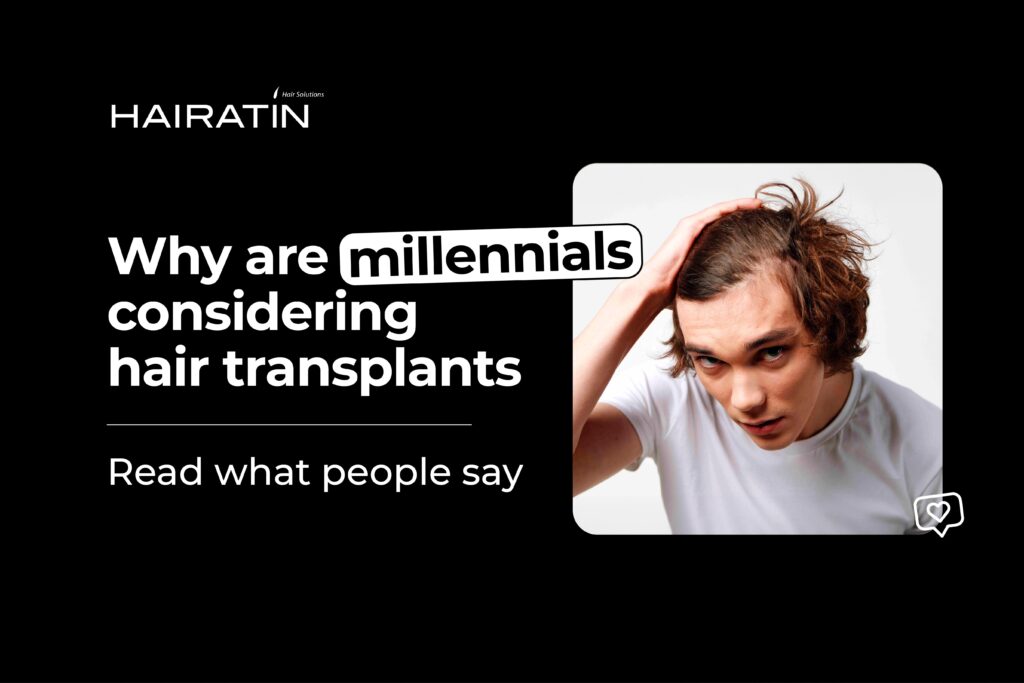
Hair loss is becoming a concern much earlier
Nearly 58% of hair transplant patients are now between the ages of 26 and 35. Not long ago, hair transplants were mostly associated with older men. Today, millennials are thinking about thinning hair, receding hairlines, and hair transplants much earlier than previous generations.
Now? Men in their 20s and early 30s are already talking about receding hairlines, thinning crowns, visible scalp, and even booking consultations for hair transplants.
But why is this happening so early?
The answer goes far beyond genetics. The reality is that male hair loss has become much more common at younger ages, and it’s not caused by just one thing. Genetics still play a major role, but they’re no longer the only factor experts look at. Chronic stress, hormonal changes, poor sleep, nutritional deficiencies, aggressive grooming habits, and even lifestyle changes can all contribute to thinning hair earlier than expected.
For many men, it starts subtly. A little more scalp visibility under bright lighting. A hairline that looks slightly different in photos. More shedding in the shower than usual. Over time, those small changes become harder to ignore.
Social media changed men’s relationship with their hair
Cameras, selfies, TikToks, and constant online exposure have made appearance feel more visible than ever before. Men are noticing details they may have ignored years ago, which is why conversations around hair density, hairlines, prevention, and restoration have become much more common online. And the bar? Somehow higher than ever… hairline included.
That growing awareness is also one of the reasons hair transplants have become increasingly popular among millennials.
Why more millennials are considering hair transplants
For some men, a transplant can absolutely be the right long-term option. But many people now see surgery as the first step instead of the last one.
Hair transplants are expensive, invasive, and require recovery time. And in many cases, younger men are exploring them before trying less invasive alternatives first.
That’s where modern hair loss solutions have changed the conversation.
There are more options before surgery. Today, there are more ways to manage thinning hair before reaching the point of surgery.
Treatments like Minoxidil can help support hair regrowth over time, especially when used consistently during the earlier stages of thinning. Scalp-focused routines and healthier hair habits can also help maintain stronger-looking hair. And for men looking for immediate confidence while managing visible thinning, modern hair fibers have become one of the most popular non-invasive solutions.
Unlike other formulas that look dusty or obvious, our Hairatin Hair Fibers are designed to blend naturally into real hair. We use a lightweight keratin + cotton blend designed for a natural-looking finish, helping create the appearance of fuller-looking hair in seconds.
The formula also uses premium color-match technology and a translucent, light-reflective finish, allowing the fibers to blend more seamlessly into different hair types and lighting conditions.
The goal isn’t to create a fake-looking hairline. It’s to create softer, natural-looking density that moves and looks more like real hair.
The conversation around men’s hair is changing
For many millennials, hair loss is no longer something they wait years to think about. They’re becoming proactive earlier, learning about treatments sooner, and exploring different solutions before thinning becomes more advanced. And the truth is, there’s no single “right” path. What matters most is finding solutions that help you feel confident and comfortable in your own skin.
Hairatin Hair Fibers are designed to support men through every stage of that journey, whether you’re just starting to notice thinning, managing visible scalp areas, or even recovering from a hair transplant. Our ammonia-free formula is lightweight, natural-looking, and suitable for hair transplant patients looking for softer, fuller-looking coverage during the process.
Because, ultimately, it’s about confidence, self-esteem, and having options. And no matter what stage of your hair transformation journey you’re at, we’re here to help you feel like yourself again.